

Small Execution Gaps Create Big Performance Differences
Branch performance rarely changes all at once. It shifts gradually.
A conversation is handled slightly differently. A follow-up step gets skipped. Coaching becomes less consistent. Employees interpret priorities in different ways.
Over time, these small variations become patterns — and those patterns begin to affect customer experience, employee performance, and business outcomes.
That is how performance drift begins.
Why Operational Consistency Breaks Down
- Different coaching habits across managers
- Uneven employee confidence or skill levels
- Inconsistent follow-through on service standards
- Local workarounds becoming routine
- Limited visibility into frontline behaviors
Similar Teams, Different Results
- Are employees asking the right questions?
- Are managers coaching to the same standards?
- Are customer issues being resolved consistently?
- Are service and sales expectations being applied in every interaction?
The Earlier You See Drift, the Faster You Can Correct It
Performance drift is easier to fix when it is identified early.
By the time it appears in customer satisfaction scores, complaints, missed goals, or employee performance reviews, the behavior has often been present for weeks or months.
Organizations that monitor frontline execution can spot early warning signs before they become larger performance problems
Turning Variation Into Opportunity
- Strengthen operational consistency
- Improve employee coaching
- Reduce avoidable performance gaps
- Create more predictable customer experiences
- Scale successful behaviors across the network
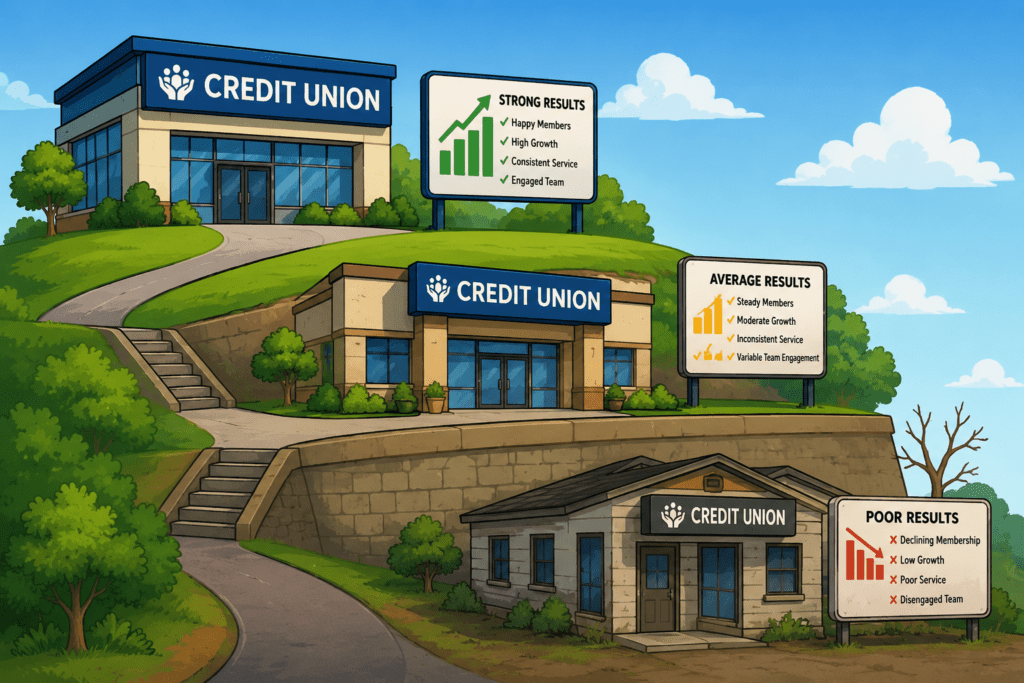
Consistency Is What Separates Good Branches From Great Networks
Strong branch performance depends on more than hiring good people or setting clear goals.
It depends on helping every team execute consistently, every day.
When leaders can see where performance drift begins, they can act sooner, coach more effectively, and create more reliable results across the entire branch network.
