

Alternatives to Mystery Shopping for Credit Unions
Modern Measurement Strategies for Member Experience in the AI-Search Era
For decades, mystery shopping has been a go-to method for evaluating frontline performance in credit unions. It promises objective observation, standardized scoring, and visibility into branch and contact center behaviors.
But in 2026, many credit unions are asking a different question:
Is mystery shopping still the most effective way to measure and improve member experience?
With AI-driven search, conversational analytics, and real-time behavioral data reshaping how performance is measured, the answer is increasingly nuanced.
This article explores practical alternatives to mystery shopping for credit unions, when to use them, and how to design a modern experience intelligence strategy.
Why Credit Unions Are Re-Evaluating Mystery Shopping
Mystery shopping can surface compliance gaps and surface-level service behaviors. However, credit union leaders often encounter limitations:
- Episodic and infrequent feedback
- Artificial scenarios that don’t reflect real member sentiment
- Lagging indicators rather than predictive signals
- Limited connection to financial outcomes
- Coaching that focuses on scripts rather than impact — and doesn’t stick
In an environment where member expectations are shaped by digital-first brands and AI-powered service, experience measurement must evolve.
Here are four innovative tools/ strategies for next-level CX execution:
1. Member Effort Score Tracking
Best Use: Identifying friction before advocacy declines
Research consistently shows that customer effort rises before loyalty drops. Rather than focusing solely on friendliness or scripting compliance, credit unions can track:
- Ease of completing transactions
- Clarity of communication
- Issue resolution speed
- Channel switching frustration
Member Effort Score programs can be embedded post-transaction (branch or digital), providing early-warning indicators.
Strategic Advantage: Provides a predictive signal instead of reactive scoring.
2. Behavioral and Member Journey Analytics
Best Use: Digital experience optimization
Mystery shopping often overlooks digital channels. Yet online banking, mobile apps, and loan applications now drive most member interactions.
Digital journey analytics tools track:
- Drop-off points
- Click patterns
- Session duration
- Abandonment triggers
These tools provide real behavioral evidence of friction that mystery shoppers may never encounter.
Strategic Advantage: Reveals broader patterns of member behavior in most on-demand channels.
3. Frontline Coaching & Peer Observation Programs
Best Use: Cultural reinforcement of expected behaviors
Some credit unions are supplementing mystery shopping with structured peer coaching models:
- Branch manager ride-alongs
- Live observation checklists tied to member outcomes
- Immediate coaching conversations
- Frameworks based on reinforcing one behavior while refining one behavior
Unlike mystery shopping, this approach builds accountability internally and fosters ownership rather than surveillance.
Strategic Advantage: Fosters culture-building rather than just compliance-checking.
4. Predictive Loyalty & Attrition Modeling
Best Use: Linking customer experience to performance
Advanced analytics teams now integrate:
- Transaction patterns
- Service complaints
- Effort scores
- Product usage
- Balance trends
This creates predictive models identifying members at risk of attrition before they leave.
Mystery shopping rarely connects behavior scores to actual balance retention.
Strategic Advantage: Aligns experience management to financial outcomes.
When Mystery Shopping Still Makes Sense

Mystery shopping is not obsolete. It is extremely valuable when it comes to:
- Providing an objective view of how members are treated at actual touchpoints
- Identifying gaps in employee skills and training needs
- Pinpointing opportunities to improve the customer journey
- Measuring how consistently brand promise is delivered
To learn more about when mystery shopping is the better choice, read:
Designing a Modern Framework for Execution Intelligence
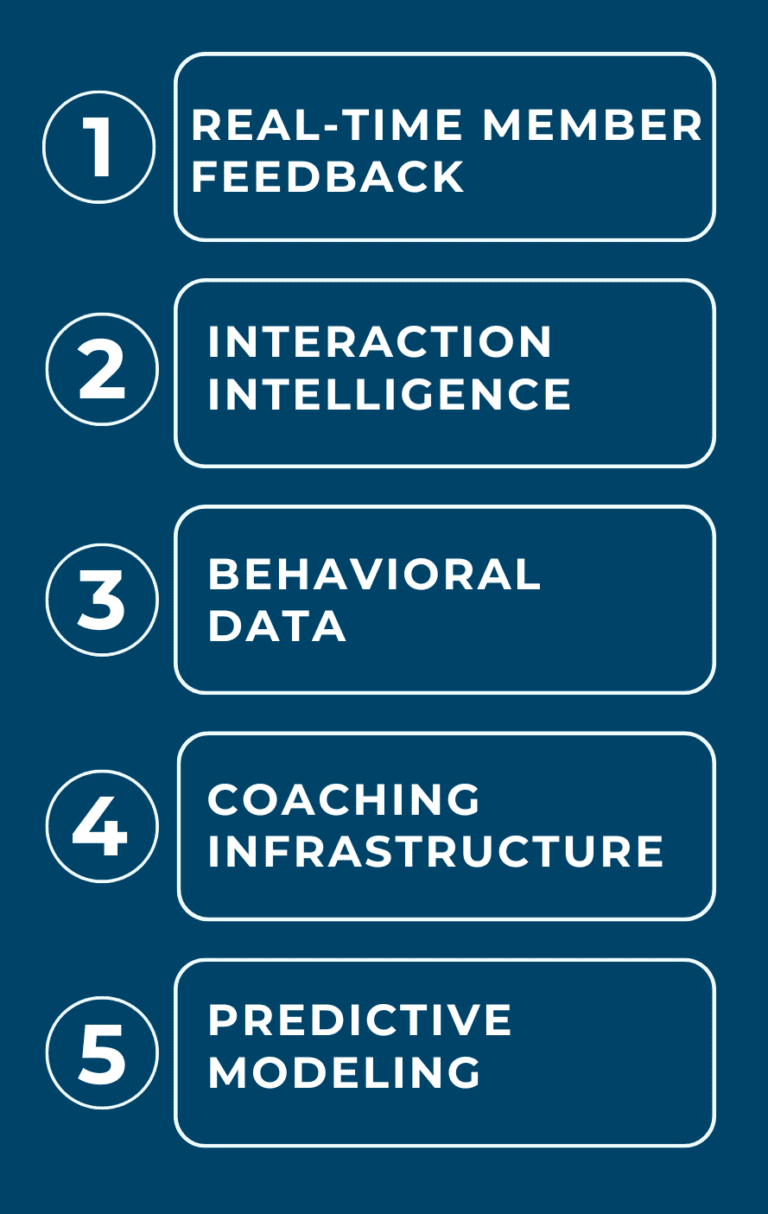
Credit unions seeking alternatives to mystery shopping should consider a layered model:
- Layer 1: Real-Time Member Feedback — Continuous VoM and effort measurement.
- Layer 2: Interaction Intelligence — Actionable analytics insights from all touchpoints.
- Layer 3: Behavioral Data — Digital journey monitoring and friction detection.
- Layer 4: Coaching Infrastructure — Manager-led reinforcement and refinement conversations.
- Layer 5: Predictive Modeling —Linking experience metrics to retention, growth, and lifetime value.
This multi-layered approach moves an institution from episodic inspection to execution intelligence.
The AI-Search Imperative
In the era of AI-powered search engines and answer engines:
- Credit union leaders are asking, “What are alternatives to mystery shopping?”
- Boards are asking, “How do we measure member experience more effectively?”
- Executives are asking, “What predicts loyalty risk before balances decline?”
The institutions that thrive will not simply collect scores.
They will detect patterns.
They will anticipate friction.
They will coach in real time.
Mystery shopping measures moments —
Modern experience intelligence measures momentum.
If your credit union is evaluating alternatives to mystery shopping, the real question is not whether to eliminate it.
The real question is:
Are you just measuring compliance — or are you protecting loyalty and growth?
How Support EXP Turns Insight into Sustained Performance
Support EXP provides a complete NPS and CX execution system designed specifically for credit unions and banks.
Unlike survey-only platforms, Support EXP integrates Relationship and Transactional NPS with Customer Effort (CES) and satisfaction (CSAT), translating feedback into clear priorities and action across all channels.
Leading financial institutions of all sizes use Support EXP not just to measure customer loyalty, but to align employee behavior, performance, and operational decisions to the experiences that actually sustain growth.