
How CX Metrics Apply Differently in Credit Unions vs. Banks
Interpreting NPS, CES, CSAT, and Loyalty Signals Through a Member-Owned Lens
Written by Support EXP
Ready to see CX analytics in action?
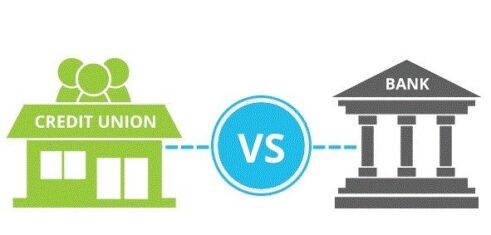
Key Takeaways:
- CX metrics behave differently in credit unions because member ownership and long-term relationships change how loyalty and satisfaction are expressed.
- High CX scores in credit unions often reflect trust and commitment rather than consistently friction-free experiences.
- Member behavior tends to delay negative scoring, making declines in CX metrics a later-stage risk signal.
- Relationship-level metrics like annual NPS can mask operational and experience issues occurring at the interaction level.
- Effort and transactional measures often surface experience problems earlier than top-line loyalty scores in credit unions.
- Effective CX measurement in credit unions requires interpreting metrics through a member-owned lens rather than applying bank benchmarks directly.
Introduction
Customer experience (CX) metrics are often presented as universal, easily applied to any industry. In practice, the way CX metrics function — and what they actually mean — differs materially between credit unions and banks. Governance models, member behavior, product relationships, and organizational structure all influence how CX scores should be interpreted and acted upon.
Understanding these differences is essential for credit union leaders who want to avoid false conclusions, misplaced benchmarks, and misaligned incentives.
Is CX Measurement Different for Credit Unions and Banks?
At a methodological level, the tools of CX measurement are the same for banks and credit unions. Both use Net Promoter Score (NPS), Customer Effort Score (CES), Customer Satisfaction (CSAT), and related measures to gain a clearer understanding of their members or customers.
The difference lies in context.
Banks typically operate in a more transactional, product-centric environment. Credit unions operate in a relationship-centric, trust-based environment shaped by member ownership. As a result, credit unions’ CX patterns are distinct from those of banks:
- Loyalty is often structural, not purely experiential
- Friction may be tolerated longer
- Advocacy does not always track cleanly with satisfaction
- Scores tend to move more slowly — but break faster once trust erodes
These dynamics mean CX metrics in credit unions are less volatile, but also easier to misread.

How Member Behavior Changes CX Interpretation
Member behavior is the single biggest reason CX metrics operate differently in credit unions.
1) Members Stay for Reasons Beyond Experience
Credit union members often stay because of:
- Shared values or community ties
- Long-standing relationships
- Limited perceived alternatives
- Trust built over years, not interactions
This creates loyalty inertia. High NPS or CSAT scores may reflect commitment rather than consistently excellent experiences.
Implication:
A stable or strong score does not necessarily mean experiences are improving—or even holding steady.
2) Members Are Slower to Penalize
-
- Operational friction
- Channel inconsistency
- Policy limitations
Implication: Transactional issues often surface first in comments, effort signals, or behavior, not in top-line scores.
3) When Scores Drop, Risk Is Already Elevated
Because members tolerate more friction, declines in CX scores are often late-stage signals. When a member finally gives a low score, trust erosion is usually well underway.
Implication:
Credit unions cannot afford to wait for headline scores to change before acting.
Structural Realities That Affect CX Scores
Beyond behavior, several structural realities unique to credit unions influence CX measurement.
1) Member Ownership Changes the Meaning of “Recommend”
In NPS, the core question — likelihood to recommend — assumes a consumer mindset. Credit union members may recommend for reasons unrelated to experience quality, such as:
- Belief in the organizational mission
- Desire to support the cooperative model
- Advocacy rooted in values, rather than service execution
Implication: Relationship NPS often reflects institutional affinity, not just experience performance.
2) Broader, Deeper Relationships Mask Friction
-
- Higher product-per-member ratios
- Longer average tenure
- More cross-channel interaction
3) Resource and Technology Constraints Shape Expectations
- Leaner teams
- Smaller technology budgets
- Legacy cores or hybrid channel environments
Implication: Scores may look “healthy” even when internal teams are absorbing unsustainable friction.
What This Means for Common CX Metrics
NPS — Net Promoter Score
- Relationship NPS (rNPS) reflects long-term trust and affinity
- Transactional NPS (tNPS) reveals where experiences reinforce or undermine that trust
In credit unions, rNPS is a lagging indicator. tNPS is often a leading signal — especially when paired with effort or friction data.
CES — Customer Effort Score
- Digital journeys
- Contact center interactions
- Policy-driven processes
CSAT — Customer Satisfaction
CSAT often remains high in credit unions even as experience quality degrades incrementally.
It is best used:
- At the interaction level
- In combination with member testimonials
- As a diagnostic, not a loyalty proxy
Why Credit Unions Should Interpret CX Signals Differently
For credit unions, CX measurement is less about comparing scores to banks and more about detecting early risk inside stable relationships.
Key mindset shifts:
- High scores ≠ no problems
- Stability ≠ safety
- Small declines ≠ small issues
The goal is not to chase benchmarks, but to understand movement, patterns, and divergence between metrics.
The Bottom Line for Credit Union Leaders
- Member loyalty can mask experience issues
- Structural trust delays visible score movement
- Declines often indicate advanced risk, not early warning
Clarify the Right CX Measurement Approach: CX metrics only create value when interpreted correctly. A focused conversation can help align NPS, CES, and CSAT to member behavior, organizational structure, and practical execution.
Have More Questions? Reach Out to Our Team Of Experts
Net Promoter®, NPS®, NPS Prism®, and the NPS-related emoticons are registered trademarks of Bain & Company, Inc., Satmetrix Systems, Inc., and Fred Reichheld.